Posts

Showing posts with the label pollinator garden

Pollinator Grant denied, but park will go on!

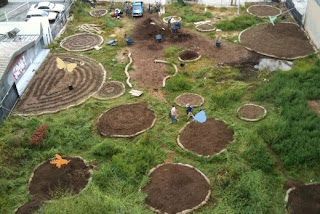
The idea of building a 5,000 sq. ft pollinator garden with a large community garden surrounding it took a major blow on Wednesday.  The first phase of the park would have been 1,250 sq. ft.  The second phase would have funded the rest of the park.  Phase 1 would have started construction in early 2017. The park was up against many different projects from around the world, and many dealt with projects that could help save lives or create jobs.  While the pollinator project will create jobs, the organization felt that while the project was worthy, other projects outweighed ours.  The encouraged us to apply again in the future. The project is not dead, and still very much alive.  The project was going to continue regardless of the grant outcome.  While the size and plans of the park have changed, the overall project will still move forward.  The idea is to have the project start in early 2017, and still contain many of the same elements of the ot...

Some of the first type of buildings of new La Gonave Development

Image
 Large development projects usually include large buildings, however that isn't always the case.  Some of the first developments on La Gonave will be built to serve the population size, test the market with little expenses, and projects that can be built cheaply. Having small buildings that serve as small bars and shops will be the way to go.  Many ideas that will go into the Focus City such as building bikeways, and pedestrian only paths make having small village style buildings the way to go.  We are currently looking at affordable ways of construction, and below is an example of an open-air style pub that we have been looking at for La Gonave. The idea with all of the development structures is that they have a radius around the structure where there has to be a foot path incorporated into the plan.  This builds up infrastructure while not utilizing public funds, but also allows the business to have their own style. Such a structure like the one below ...

FIRST GRANT APPROVED

An Observation Hive WILL be heading to La Gonave island in Haiti.  The observation hive is part of a $1,650 investment to the island where the hive will serve to teach children and even locals in the city of Anse-a-Galets about honeybees. This is especially important to me as I wrote parts of the grant.  To get the grant is beyond words.  Our not-for-profit partner Greater Good Haiti will be getting this observation hive.  The hive will be installed this year with honeybees being purchased next month. On top of the honeybees for the observation hive, we will also purchase about two additional hives for honey production which will also be located at Greater Good Haiti.  This location will be our Anse-a-Galets hub for the honeybee network.  Coupled with the observation hive as well as production hives, it will allow La Gonave to have a working and teaching center for honeybees. We still await news on the pollination grant which will build the pollinatio...

Pollinator Garden blueprint

We have finished the design of the first phase of the pollinator garden.  This is a very rough draft of the plan, but gives an idea of the flow of the park.  The number of plants listed is incorrect but were placed on the page to identify where exactly they will go. See the plans here: http://gardenplanner.almanac.com/garden-plan.aspx?p=694060 If we are able to get approval of the grant we applied for, this would be the first phase of the project.  As you can see, most of the infrastructure such as compost bin, greenhouse, storage shed, and water features are built in this phase.  This is due to the chance that we wouldn't get approved for additional phases.  Also if we had to build the next phases over a longer term due to financing, we would have all of the required facilities to move forward. Let's hope we get the grant!  Go Gonave!

Pollinator Garden Size Identified

Image
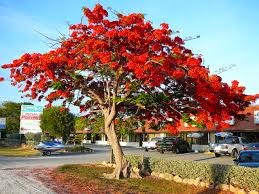
As we are developing the pollinator Garden, we understand that the project will have to be done in phases.  The park itself will be rather large as the first of four section will be some 25 ft. wide by 50 ft. long.  The park will be designed, planned, and built by Hurko Co.  We are look at the company as it will make its introduction to Haiti for the first time in 2016. The funding for the pollinator garden will be determined by Jan. 2016.  The project is being looked at from a few different perspectives.  The project would be drastically cut down in size if the grant is denied.  Part of the pollination/honeybee highway, the pollinator garden will introduce many new types of plants to La Gonave such as the kiwano and Date Palm Tree.  Existing plants and trees such as the Flamboyant Tree would also be grown.  From a conservation view, this park will educate the public on what each plant and tree does for the environment.  Also it will stres...

Pollinator Garden is now in the design phase.

Image
The pollinator garden/park is now in the design phase.  We are looking at what features the park will have, the dimensions of the park, and just the general layout.  As you know we applied for a grant to build the park in Anse-a-Galets on La Gonave island.  The pollinator garden will serve as a hub of activity for insects and birds, but also will be a year round park.  Below is a general idea of what we wanted our pollinator garden to look like. We want to also have art features throughout the park which will add to the overall appeal to the garden.  So not only do you see insects and birds but also art along the way.  We intend on having a main path through the park, and some secondary paths as well.  We will have an onsite tool storage facility that will also act as a water catchment.  There will be an area for composting as well as education about the importance of composting.  Any vegetables or spices grown on the property could b...

Grants and private funding are the way to go for honeybee project.

One of the ways to finance a project with less risk is to do get donations and investments.  While we are doing that, we have to understand that grants are also very viable. When you look at the entire project everything has been from private financing.  These grants will add a new layer to the project.  Grants are a way to say that we have a strong project that these agencies believe in.  Not only that, but as I mentioned it propels the project faster by providing money that can be immediately injected into the project. Just yesterday I talk about the pollinator grant, which totals about $1,000.  Now it is up to that agency to decide if our project is worth the grant.  Like other things, even if we are not awarded the grant, the honeybee highway and pollinator gardens will still be built.  Albeit much slower.  What would take less than a year to build could take 5 times as long.  The honeybee project is going at a much slower pace due...

Applying for another grant

I mentioned that our partner has applied for a grant to supply an observation hive, which would be over $1,500 grant.  If approved, this hive will head to La Gonave, and be installed in a community center.  There it will help train future beekeepers, children, and adults in the community. Another grant in the amount of $1,000 is also being offered.  This grant is a Pollinator Grant, which would be wonderful for our honeybee highway that we want to build on the island of La Gonave.  This would propel the project and expand the amount of area where we can help fix the damaging effects of deforestation.  This will allow for more native plants to come back to La Gonave, and give precious food for bees, wasps, butterflies, and birds.  We may get our partner to also apply for this grant to double the efforts for the honeybee highway. By applying for this grant, it allows us to make a long lasting impact on the island of La Gonave.  While we are not sure...

Building a pollinator garden and greenhouse

Image
When visiting La Gonave later this year, we will be discussing with the Mayor of Anse-a-Galets many things from housing to jobs.  We are wanting to build a greenhouse and a pollinator garden.  The greenhouse will not only have seedlings and starter plants for vegetables which farmers can then grow on their property, but it will also have flowers and wild plants for bees and for reforestation. So what will the pollinator garden look like, and what is its purpose?  The pollinator garden will be on about 1 acre of land, and contain many flowers that will help honeybees, butterflies, hummingbirds, and other bees.  The land will also contain a 12' x 32' hoop-style greenhouse.  The greenhouse will also contain at least two honeybee hives which will aid the greenhouse and nearby pollinator garden. The garden will help with reforestation efforts in a controlled environment.  In this garden various trees will be grown.  Moringa, various banana, palm, bambo...